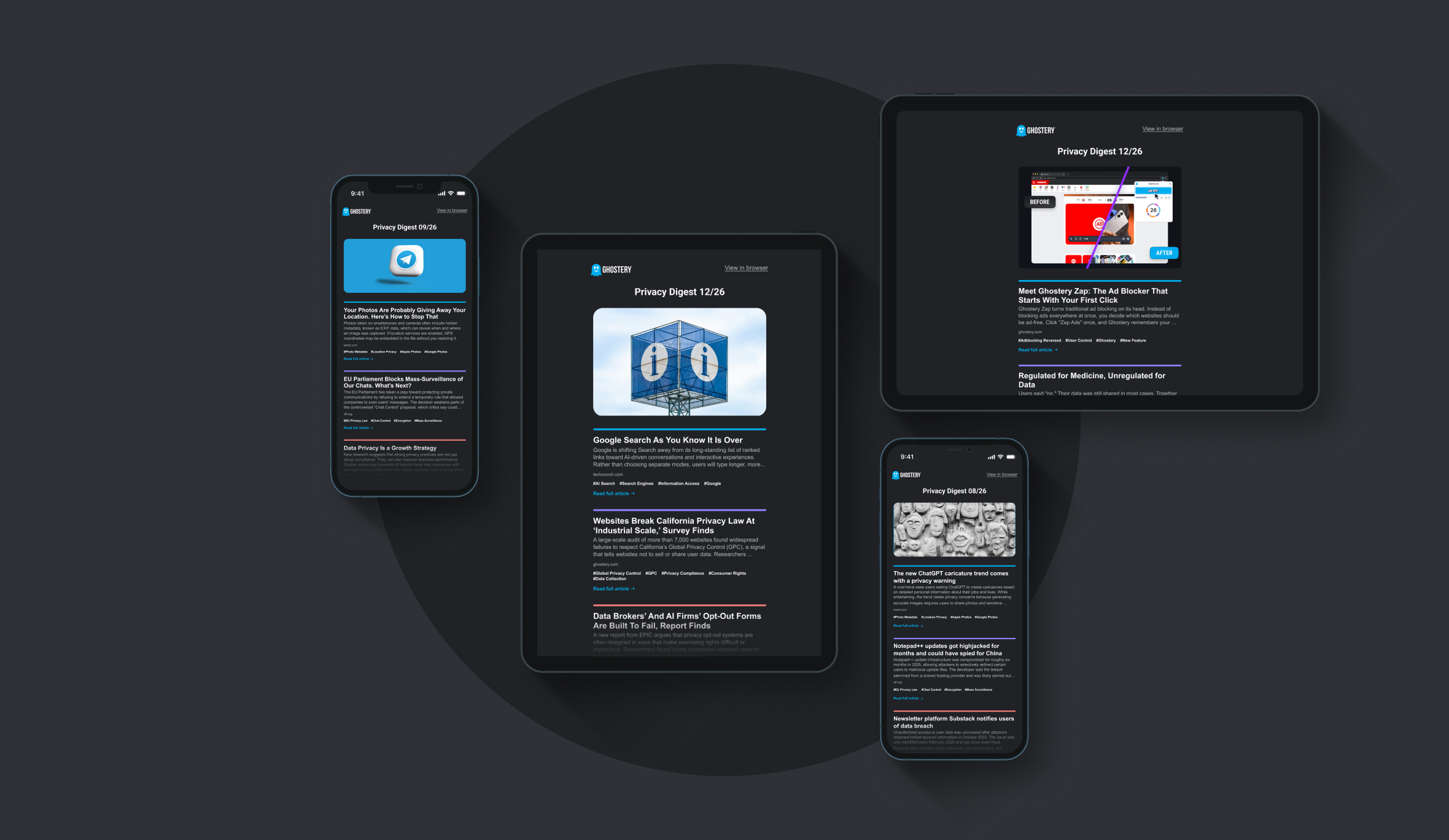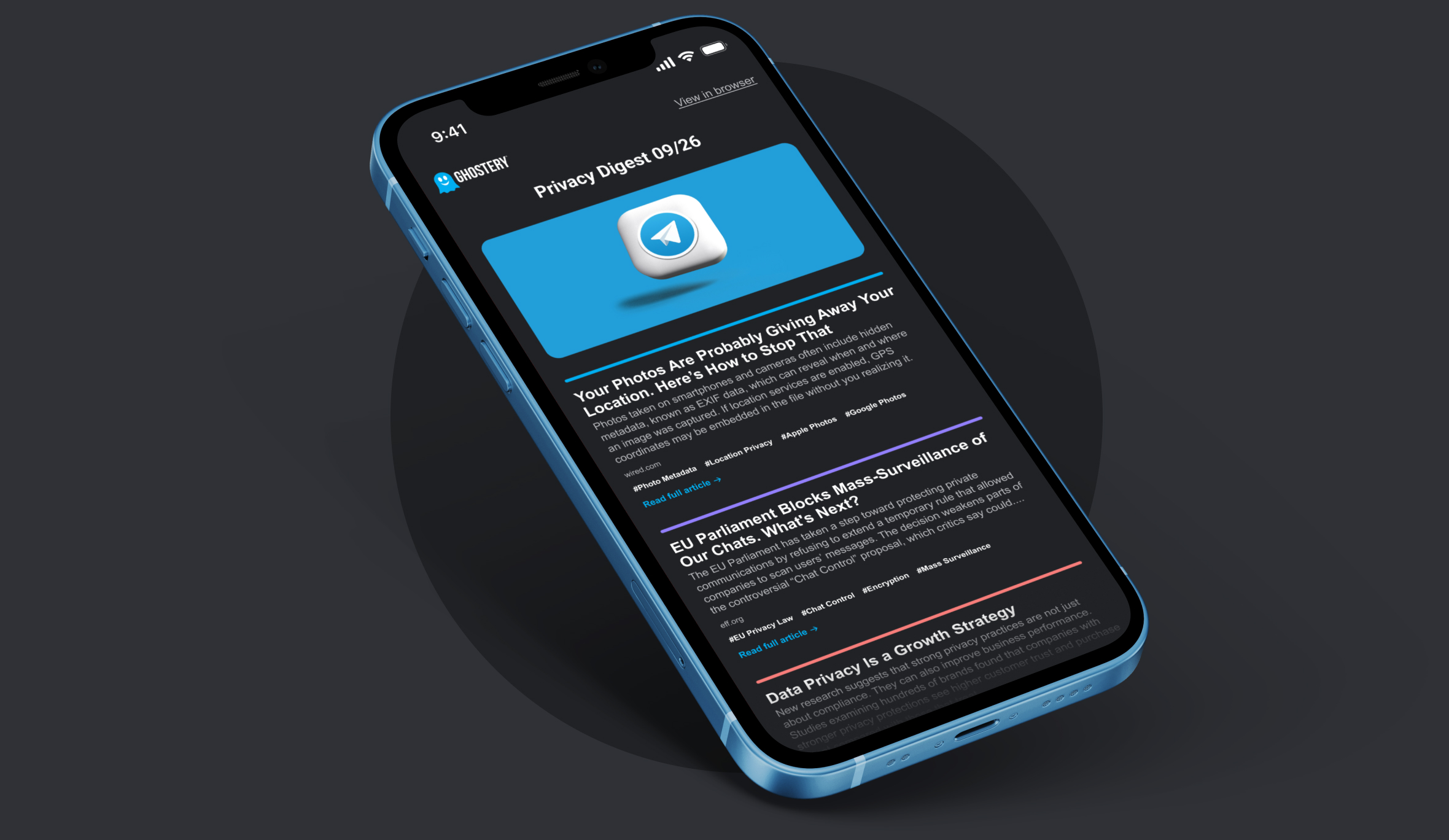
Protect your digital identity with our Privacy Digest!

Receive the latest privacy news & tips, straight to your inbox

Stay up to date and maintain good digital health

Sends every 2 weeks. No more, no less

Top articles from the latest edition

The Privacy Digest newsletters are designed to help our readers feel secure online and empowered to take action in protecting their digital identity. Here’s a sneak peek at what we covered in our latest edition…

US Military Disables Ad Tracking

The U.S. military has disabled advertising tracking across government-issued phones and computers after foreign adversaries reportedly used commercially obtained location data to target troops in the Middle East. The protections cover multiple military branches and make individuals harder to identify in location datasets sold by data brokers. Personal devices brought onto bases remain a potential exposure. Meanwhile, U.S. intelligence agencies and the FBI have themselves confirmed buying commercially available location data for surveillance without a warrant.

techcrunch.com

Ad Tracking Surveillance Data Brokers Location Data

AI Turns Police Cameras Into People Search

Flock Safety’s latest AI search tools let police continuously scan camera networks for people matching written descriptions, not just license plates. WIRED found the system can flag searches involving sensitive traits, but some safeguards only warn officers and log what they do rather than stop the search. That matters because Flock has already been linked to dozens of alleged misuse cases. Experts warn the technology is difficult to audit, can produce inaccurate matches, and still leaves broad room for surveillance.

wired.com

AI Surveillance Police Technology Visual Tracking Civil Liberties

When Someone Else’s Smart Glasses Record You

A lawsuit against Meta over its AI-powered glasses has expanded to include bystanders who never bought or wore the devices but say they were recorded without their knowledge. The complaint alleges that footage captured through the glasses’ AI features was sent to third-party contractors and used to train Meta’s AI without adequate disclosure or consent. Earlier reporting cited intimate recordings reviewed by overseas workers. Meta disputes the allegations. The case raises a broader question: what privacy rights do bystanders have around always-on wearable cameras?

fortune.com

AI Training Smart Glasses Bystander Privacy Biometric Data

Over 100+ million Ghostery downloads for privacy protection

Join our 450,000 + subscribers

Feel more secure and empowered online with every new edition of Ghostery’s Privacy Digest.

Check email

Please confirm subscription

We’ve sent you an email to . Please confirm your subscription to Ghostery’s Privacy Digest.

We recommend adding newsletter@ghostery.com to your contacts to avoid having our newsletter flagged as spam.