Privacy Digest 13/26

Get Privacy Digest in your inbox
Subscribe
The Form Asked My Permission To Share My Health Data. Then It Wouldn’t Let Me Say No.
Patients are increasingly encountering healthcare intake systems that make it difficult to exercise meaningful privacy choices. An investigation by The Markup found that some digital registration flows require patients to accept privacy notices before proceeding, even when those notices describe opt-out rights. Experts argue these interfaces rely on dark patterns that nudge users toward sharing sensitive medical information by making refusal cumbersome or impractical. The findings raise broader concerns about consent, patient autonomy, and the growing use of technology that prioritizes data sharing over clear and accessible privacy controls.
themarkup.org

What Pharmacies Do With Your Consent
Users said “no.” Their data was still shared in most cases. Ghostery and Verified Data audited 20 pharmacy websites across Europe and the United States to determine whether websites respected users’ consent choices. Only two pharmacies stopped tracking after visitors opted out, while the rest continued sending data to third parties. The findings raise concerns about whether consent banners provide meaningful control or merely create the appearance of choice. Equally striking, none of the pharmacies meaningfully engaged with the results despite receiving detailed evidence and an opportunity to respond before publication.
ghostery.com
If You Live In This State, Tech Giants May Soon Be Forced To Wipe Your Data
Massachusetts is moving closer to passing a major privacy law that would limit how companies collect, store, and sell personal data. The proposed legislation would require businesses to delete certain sensitive information, restrict data brokers from selling location data, and give residents greater control over how their information is used. Supporters argue that personal data has become a valuable commodity traded with little transparency, while existing consent mechanisms leave many people unaware of what they are agreeing to. If enacted, the law could become one of the strongest state-level privacy protections in the United States.
inc.com
California Parents Sue i-Ready Maker Over Student Data Collection
A lawsuit against a widely used educational platform is raising questions about who can authorize the collection of children’s data in schools. Parents allege that sensitive information, including assessment results, demographic details, and usage data, was collected without meaningful notice or direct consent. The case highlights a growing tension between schools, technology providers, and families over who controls student privacy. Beyond the specific allegations, the dispute reflects broader concerns about the expanding role of digital learning tools and whether institutional approval is sufficient when students are required to use them.
theguardian.com
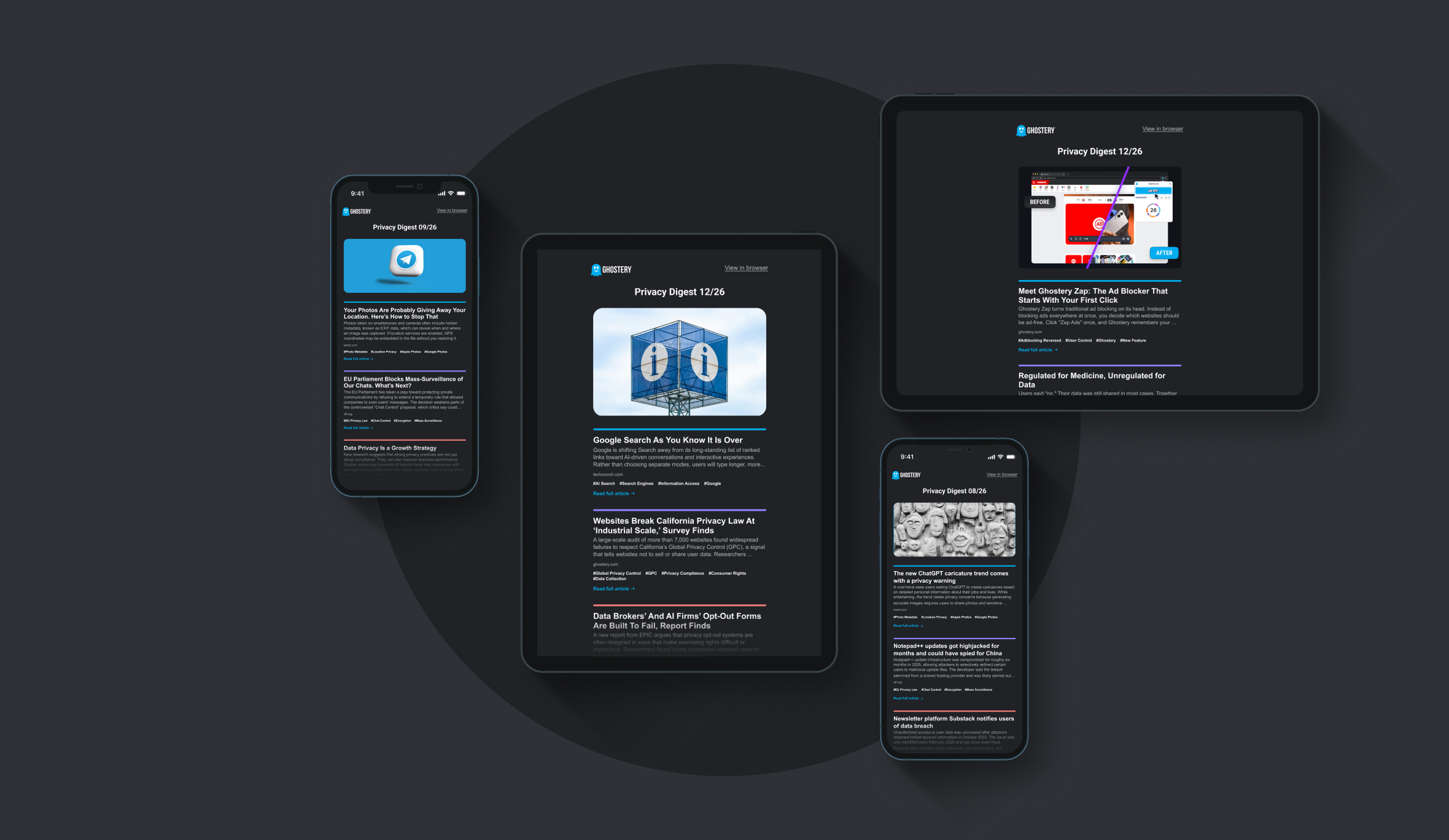
Join our 450,000 + subscribers
Feel more secure and empowered online with every new edition of Ghostery’s Privacy Digest.